Geneva 2017: Audi RS5 Coupe

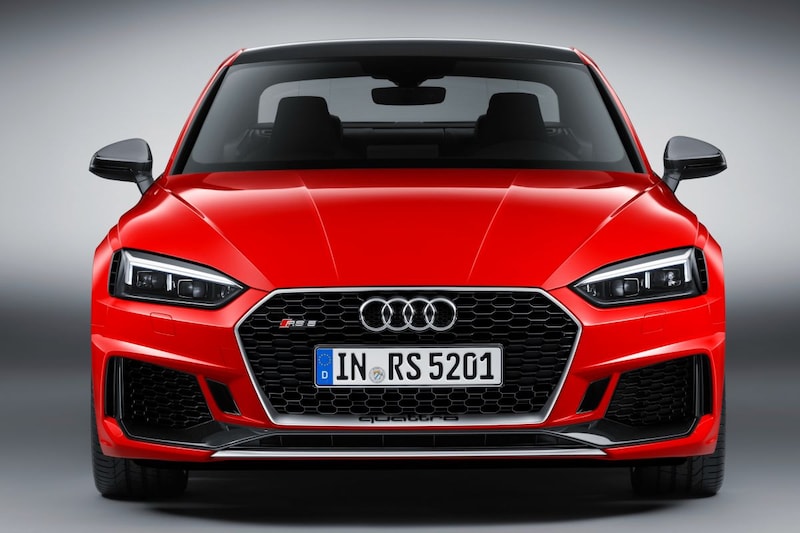
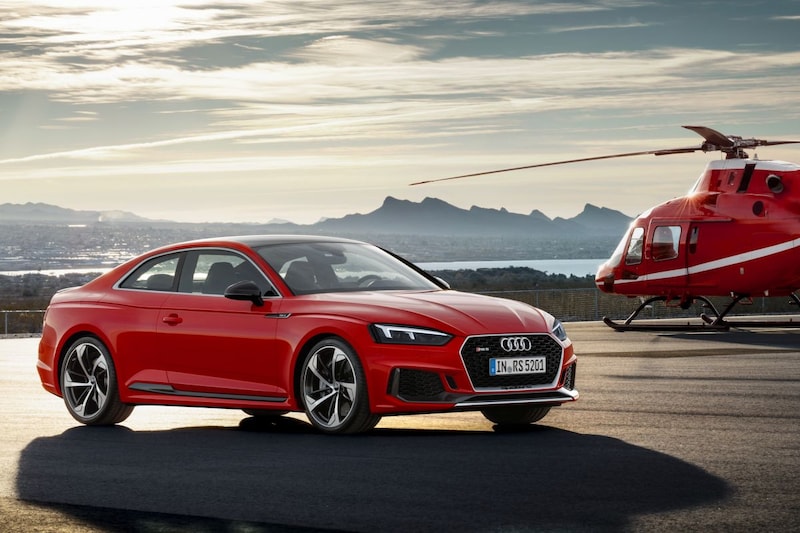
We at AutoExperience already dedicated some words to the new A4/A5 cars from the well known manufacturer based in Ingolstadt, Germany. But today things got more exciting, because Audi brought its RS (rennsport) version of the new A5 to Geneva.

(Are you a Dutch Audi dealership and interested in a review (including pictures) of the new A5/S5/RS5 by us, which will of course be published online, let us know!)

To start with our opinion on the cars design: we are impressed. Where the regular A5 and even the S5 were a bit tame and missed the brute presence of the previous A5, this RS model by Quattro GmbH does everything right by combining the beautiful timeless design of the regular A5 with some powerful extras. The black carbon front splitter, skirts, and smoked headlights are some of these. The extra ‘mini-intake’ left and right from the center grille is an attractive sporty extra with makes it easy identifiable as an RS5.
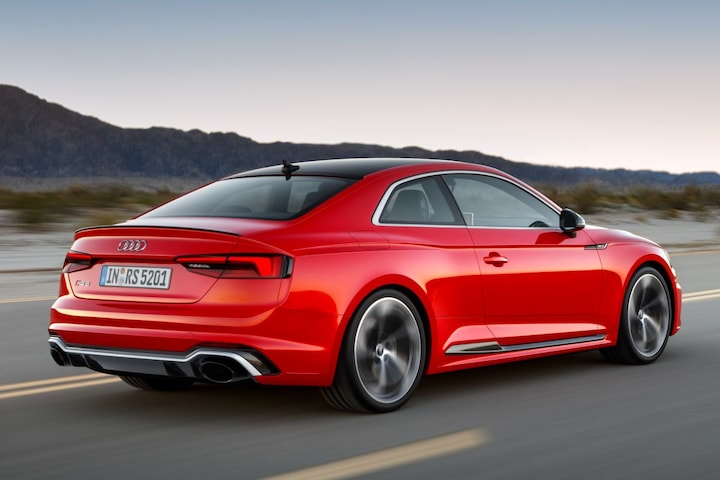
The interior gets similar treatment: Various carbon elements, beautiful quilted leather with a red / black theme, and a very tasty alcantara steering wheel which you want to grap just from the pictures only. Combine this with what already was the nicest interior in a D-segment car and the overall impression is very good.

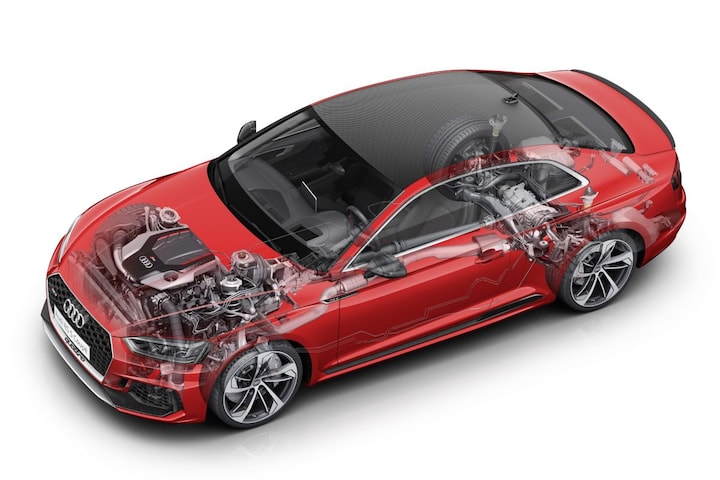
Engine-wise, we have a 2.9 litre V6 with two turbo’s. The powerplant produces an impressive 450hp and 600Nm of torque. This is more than the 4.2 V8 which was present in earlier renditions of the RS4 and RS5. Acceleration to 100 kph is below 4 seconds and with the optional Performance package top speed is limited at 280 kph.
The car will probably available later this year (2H2017) and will cost roughly the same as competitors like the BMW M4 and the fresh Alfa Giulia Quadrifoglio (90-120k, depending which country you live due to taxes).


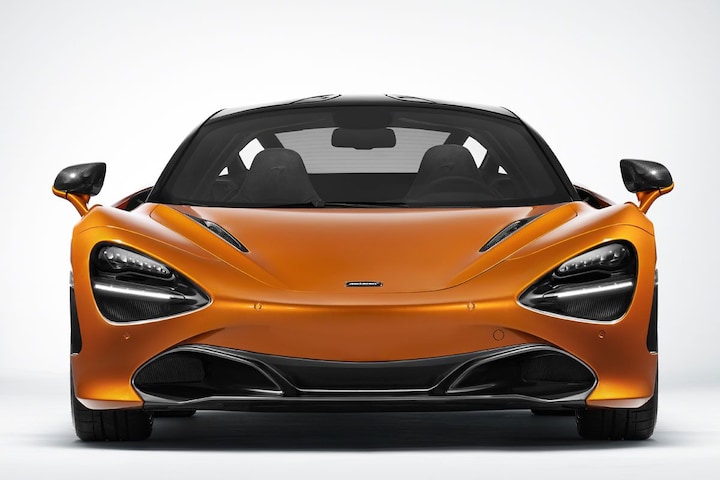
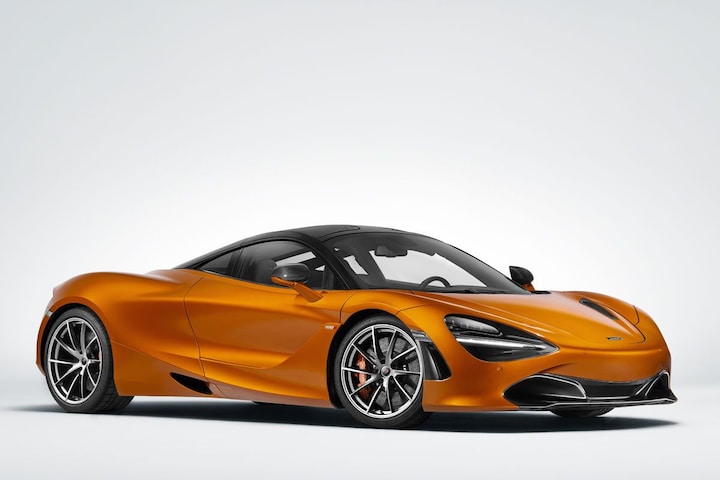
Geneva 2017: McLaren 720S

The British car maker from Woking launched the first car of its all-new line-up, the 720S!


McLaren made huge progress since the introduction of the MP4-12C, which marked the relaunch of the brand earlier only known from the legendary McLaren F1. Since the 12C, they set out a strategy where their new cars would fall in different categories, namely the Sport series, GT series, Super series, and Hyper series. Sport series is entry level, with the 540C. Sport in this case being a relative term, because the 540C is comparable to other high volume supercars like Ferrari 488GTB and Lamborghini Huracan. The 570GT focuses more on luxury than raw performance and the 650S is the main model of the Super Series, and the predecessor of this new 720S. A step higher on the ladder is the 675 LT, also as Spider, which is more exclusive and even faster. Top of the line is a true hypercar to the likes of the LaFerrari and Porsche 918 Spyder, called the McLaren P1. In all these segments, ranging from roughly 200.000 euros to more than a million for the P1, McLaren has proved to be very competitive.

Where the early cars since the relaunch like the 12C and 570S (650S predecessor) had relatively traditional design, this new 720S is a different story entirely. McLaren definitely wants to distinguish from Porsche and Ferrari with more futuristic design, which can be clearly observed from the otherworldly designed headlights / air intakes. The difference with Lamborghini is that McLarens make abundant use of curved lines, where the cars from Sant’Agata are known for their sharp lines and edges.

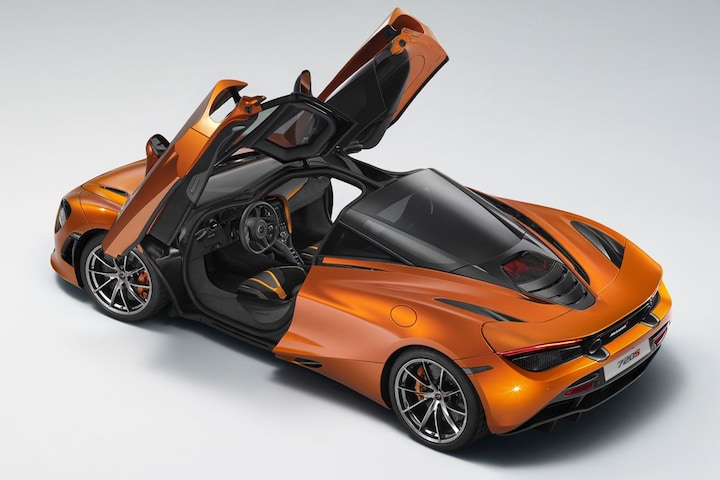
The picture above shows another proof of this futurism, with a door construction similar to both a Lamborghini’s take on the scissor door and the Falcon Wings on the Tesla Model X. The idea behind it is a more convenient entry for driver and passenger.

Engine wise, McLaren had the idea to never change a winning team. The V8 is slightly larger with 4 litres instead of 3.8, but still sports dual turbos for a whopping 720hp in total. This is more than the previous top model of the super series, the 675LT. These figures cause hypercar-like acceleration of 0-100 kph in 2.9 seconds and a top speed of 341 kph.

McLaren also decided to overhaul the interior, with a newly designed carbon fiber monocoque, new button layout, and better infotainment. Most interesting is a new ‘tiltable’ instrument cluster, which can be used in dual mode. Restricted mode shows only a horizontal rev counter and digital speed, where the full mode shows a larger full color TFT with more extensive information in a more graphical way.

Pre-orders for the new 720S will probably start very soon, with deliveries expected from Q3 2017. Prices will be probably between the 650S and 675LT.


Underdog: Cadillac ATS-V

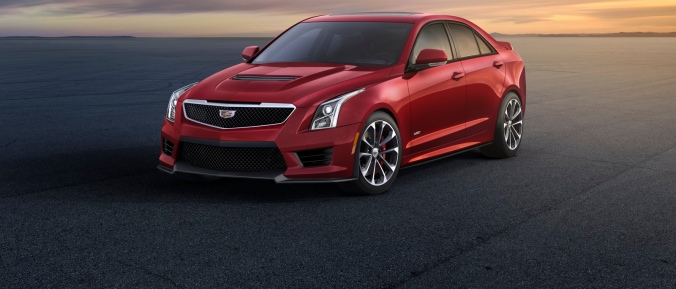
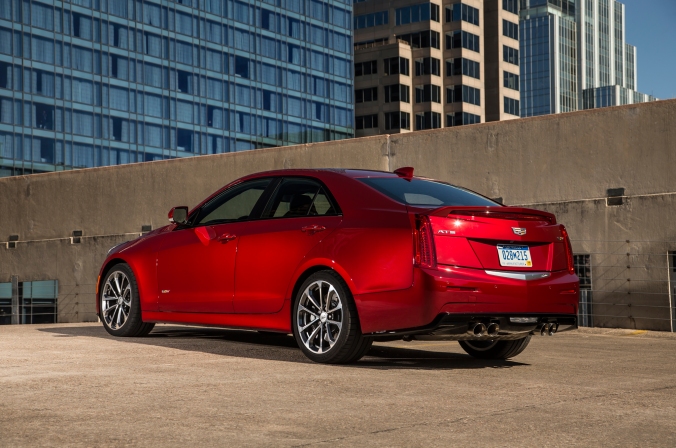
US carmaker Cadillac is already struggling for years to gain foothold in Europe and battle German domination in the premium D, E, and F-segments. And while their underperformance was somewhat understandable five years ago, with every new model Cadillac seems to get closer to the competition. A personal favorite of mine is the Cadillac ATS-V, and therefore it seems right to spend some time talking about it. Because it certainly deserves more than it’s getting on the continent.

2016-cadillac-ats-v-21

Cadillac positions the ATS-V as a competitor for the BMW M4, Audi RS4 (yet to be announced) and Mercedes C63 AMG. Therefore, its a premium d-segment car. The CTS(-V) operates a level higher, and the brand new CT6 is top of the line. The Americans certainly invested time and money to make their bid as good as possible; with an attractive and aggressive exterior (which I personally think is a job well done), modern interior, and sophisticated mechanics.

2016-cadillac-ats-v-rear-three-quarter

Engine wise, there is a biturbo V6 sporting 470 hp, which hurls the ATS from 0 to 100 in 3.9 seconds. It only stops accelerating at 304 kph. This is on par or better than the competiton. Cadillac really tried to appeal to European buyers, who prefer sophisticated and smooth engines over naturally aspirated V8s with enormous displacement. Where it still lags behind a bit, is the gearbox. The 8 speed automatic isn’t as refined and quick as the one in the BMW M4, its most important nemesis. But it compensates with very good handling, caused by direct and engaging steering and a well balanced chassis and suspension. Magnetic Ride Control is Cadillacs term for adaptive dampers, and it works great. It causes the American to keep up with the BMW, a very important feat. Where that never was the case with ‘old’ Cadillac due to sluggishness, rolling over, and unresponsive steering the Bavarian now encountered an equal.

When it comes to interior quality, the ATS-V is adequate, but not great. All modern systems are there, but it still doesnt ooze the same quality as its German counterparts. Things are better than previous years, though.

The biggest challenge for the ATS-V is not to win from its rivals in terms of performance; it already did. But the price tag is simply too steep. In the Netherlands, the car is available from 127 grand. That is more than the BMW; which means most European customers will most likely go for the M4. If GM is serious about their luxury brand selling decent numbers over here, it would be better to position the different models slightly below the competition. When an ATS-V suddenly costs 90 grand, there is a real chance BMW, Audi, and Mercedes customers want to save 10 or 20 thousand and go for the alternative option. For now, the ATS-V is only interesting for the used market, since it depreciates quickly and makes for a nice deal in a few years. A sad, and undeserved, truth.


Special attention for the BMW i8

A few years back, BMW made a very impressive entree in the field of electric vehicles with the i3 and i8 cars. Where the i3 was the more serious car, available as a pure EV and as EV with range extender (a petrol powerplant to generate power for the batteries) the i8 had to catch attention and make sure everyone was conviced BMW was serious about its new electric line-up (the i-series).

12-2015-bmw-i8-fd-1

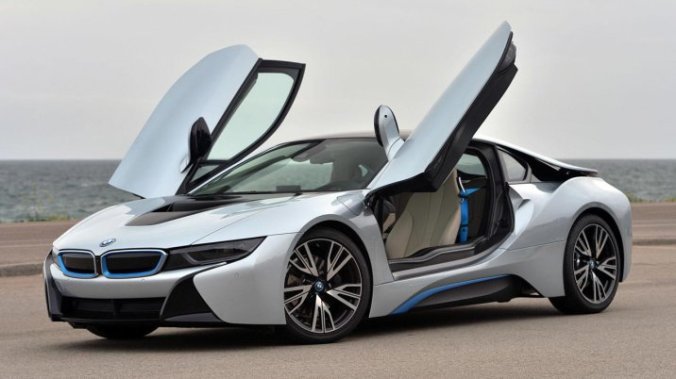
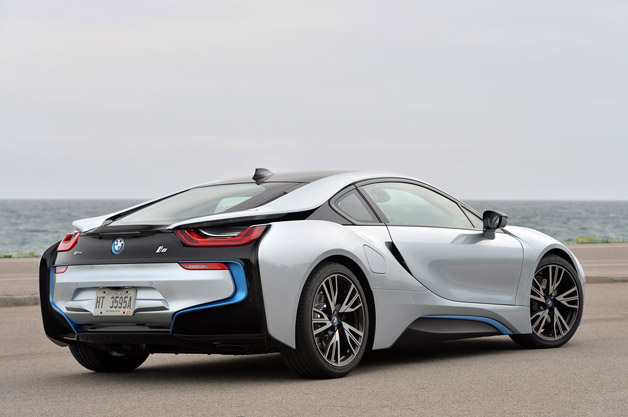
But it would really not be fair to reduce the i8 to the role of driving billboard. Because the i8 was and is an amazing car in its own right. It showed a conservative German carmaker still possessed the knowledge, will, and capability to create something truly revolutionary. And revolutionary, it was. Its amazing futuristic design with the ‘Lamborghini’-doors and the way wind is guided over (and through) the car is breathtaking.

lead5-2015-bmw-i8-fd

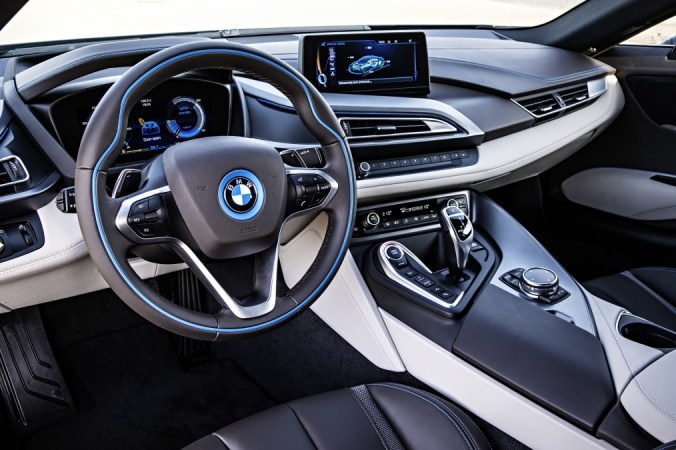
And thats not where innovation stops. The interior is created from very new and unprecedented materials like special fabrics and renewable plastics. Instruments are fully digital and adaptive, years before Audi and Volkswagen introduced these into their mass production cars. And the engine also is a very special, of course. Its not a full EV like the i3, but basically a very innovative hybrid. It can drive 30 kms on electric power only, and then switches to a hybrid configuration. The petrol powerplant is a 3 cylinder turbocharged variant, sporting more than 200 horsepower. Using performance parts and clever sound engineering (both mechanical and speaker-wise) it sounds ánd performs like one of BMWs famous inline-sixes. But at an MPG-rate which would never be possible with a regular six cylinder engine. When power / sport mode is selected, the full potential of the hybrid drivetrain is released, causing true sportscar-like acceleration (4.4 seconds 0-100) and the instrument cluster changes to an orange theme.

p90133087_highres_the-bmw-i8-09-2013

It’s a wish of the editor (in chief) of AutoExperience to once drive the i8 and experience it in real life. If you’re reading this and actually have the budget to acquire one; I’d advise in favor of it (starts around 130k). It’s an amazing car which will not look outdated or aging for years to come, and deserves its own special place between other sports and high performance cars.

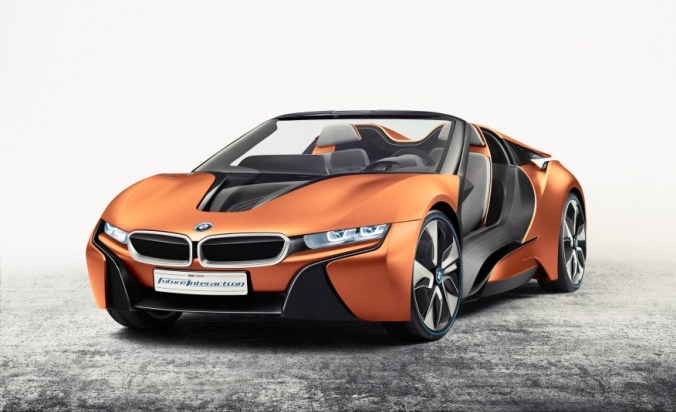
bmw-i-vision-future-interaction-concept-101-876x535

…and yes, there is a Spyder on its way too!


Tesla comes with new supermodel

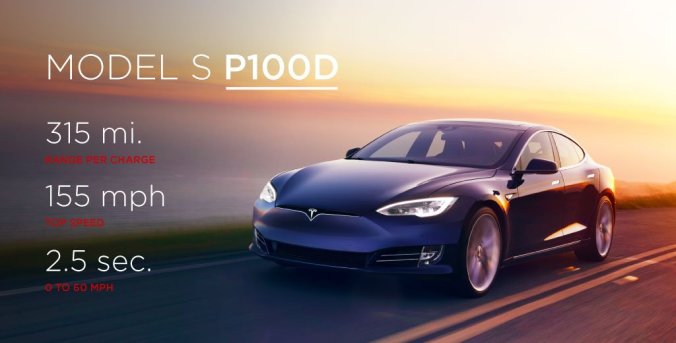
Tesla Motors confirmed the release of a new top configuration for their Model S and Model X products, the P100D Ludicrous. Dissecting the name, we know it’s a Performance model (hence the P), with a 100 KWh battery pack and all wheel drive (the D). Ludicrous mode is available, in that case the P100D is underscored.

teslap100d

Performance is truly otherworldly with acceleration from 0-100 kp/h in 2.5 seconds for the Model S. However, it is not a bargain. Prices start around 140.000 dollars for the Model S, opting for the Model X makes it a few grand more expensive. Tesla CEO Elon Musk confirmed that more profit is made from the P90D and P100D models, as they make the upcoming Model 3 possible. Therefore, buying current top of the line models could be seen as a forced form of wealth redistribution.

Tesla also offers the new 100 battery pack to P90D customers, they can swap their old packs for the new powerful one if they pay 10 or 20 thousand dollars, depending on if they already received their car or only ordered it.