The British car maker from Woking launched the first car of its all-new line-up, the 720S!
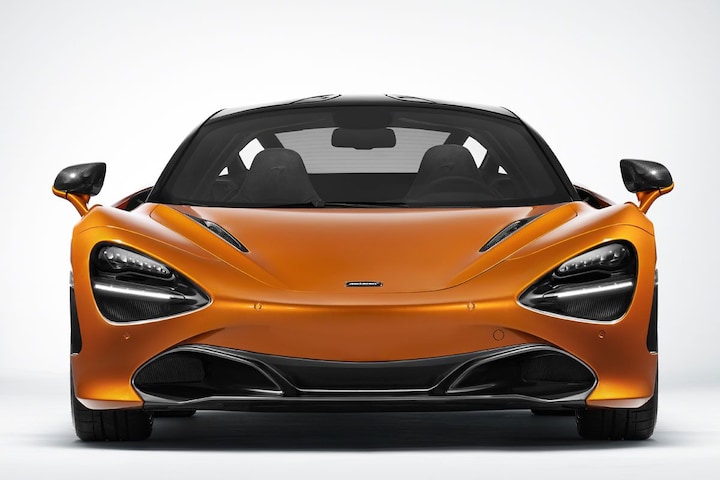
McLaren made huge progress since the introduction of the MP4-12C, which marked the relaunch of the brand earlier only known from the legendary McLaren F1. Since the 12C, they set out a strategy where their new cars would fall in different categories, namely the Sport series, GT series, Super series, and Hyper series. Sport series is entry level, with the 540C. Sport in this case being a relative term, because the 540C is comparable to other high volume supercars like Ferrari 488GTB and Lamborghini Huracan. The 570GT focuses more on luxury than raw performance and the 650S is the main model of the Super Series, and the predecessor of this new 720S. A step higher on the ladder is the 675 LT, also as Spider, which is more exclusive and even faster. Top of the line is a true hypercar to the likes of the LaFerrari and Porsche 918 Spyder, called the McLaren P1. In all these segments, ranging from roughly 200.000 euros to more than a million for the P1, McLaren has proved to be very competitive.
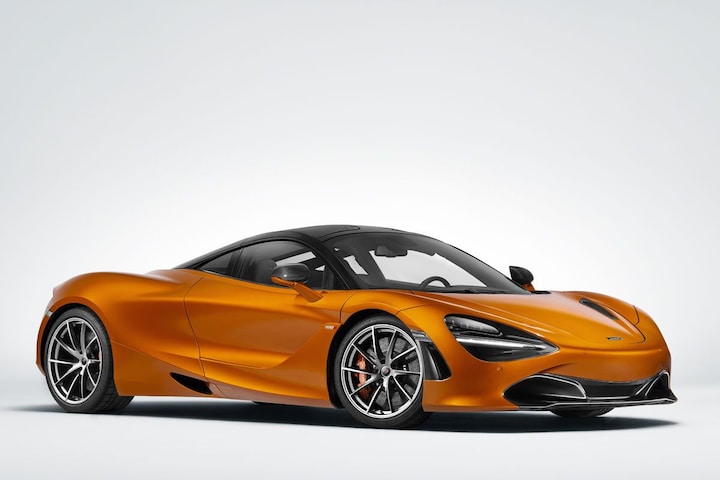
Where the early cars since the relaunch like the 12C and 570S (650S predecessor) had relatively traditional design, this new 720S is a different story entirely. McLaren definitely wants to distinguish from Porsche and Ferrari with more futuristic design, which can be clearly observed from the otherworldly designed headlights / air intakes. The difference with Lamborghini is that McLarens make abundant use of curved lines, where the cars from Sant’Agata are known for their sharp lines and edges.
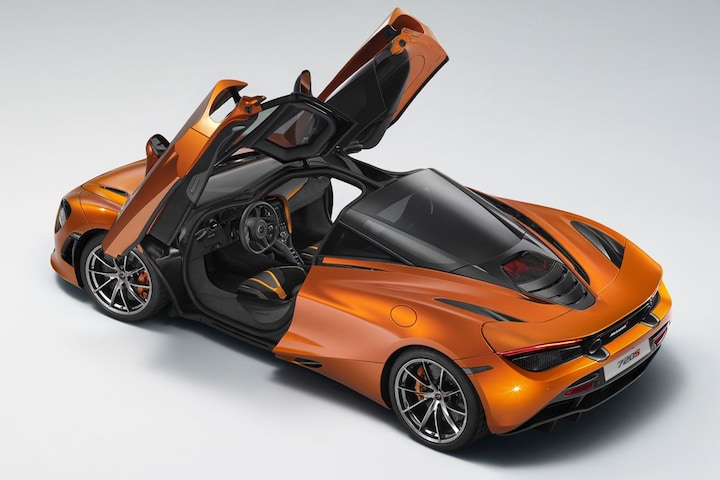
The picture above shows another proof of this futurism, with a door construction similar to both a Lamborghini’s take on the scissor door and the Falcon Wings on the Tesla Model X. The idea behind it is a more convenient entry for driver and passenger.

Engine wise, McLaren had the idea to never change a winning team. The V8 is slightly larger with 4 litres instead of 3.8, but still sports dual turbos for a whopping 720hp in total. This is more than the previous top model of the super series, the 675LT. These figures cause hypercar-like acceleration of 0-100 kph in 2.9 seconds and a top speed of 341 kph.

McLaren also decided to overhaul the interior, with a newly designed carbon fiber monocoque, new button layout, and better infotainment. Most interesting is a new ‘tiltable’ instrument cluster, which can be used in dual mode. Restricted mode shows only a horizontal rev counter and digital speed, where the full mode shows a larger full color TFT with more extensive information in a more graphical way.

Pre-orders for the new 720S will probably start very soon, with deliveries expected from Q3 2017. Prices will be probably between the 650S and 675LT.

 Auto Experience NL